
How Amazon and iHerb Make the Competition Structurally Irrelevant

The most durable market positions are built on the simultaneous combination of advantages that together make choosing a competitor require active effort. Amazon and iHerb have achieved this through product architecture, not advertising. This article explains the principle.
Word of Mouth Is the Highest-Converting Channel. It Cannot Be Purchased.

Word of mouth cannot be manufactured through incentives or campaigns. It is the natural output of an organization that consistently delivers beyond expectation. When it exists, it is the most efficient acquisition channel available — lower CAC, higher conversion, higher LTV simultaneously.
AI in Customer Service: Where It Works and Where It Destroys the Pipeline

AI has genuine utility in customer service. The problem is the instinct to treat it as cost elimination rather than capability expansion. When AI replaces human judgment in situations that require it, the organization pays more in churn and re-acquisition than it saved in headcount.
Why Departmental Silos Create Revenue Loss

Revenue loss is rarely caused by a weak product or an ineffective team. In most cases, it is the result of organizational misalignment — departments that are individually functional but collectively disconnected. This article examines where that misalignment occurs and what a coherent revenue architecture looks like.
How Ferrari and Nike Use Manufacturing Decisions as a Revenue Strategy

The most durable competitive advantages are not built in marketing. They are built at the product level. Ferrari and Nike make structural decisions at the manufacturing stage that most competitors would consider inefficient — and that is precisely the source of their pricing power.
Why Lifetime Value Must Be Designed Before the Product Exists
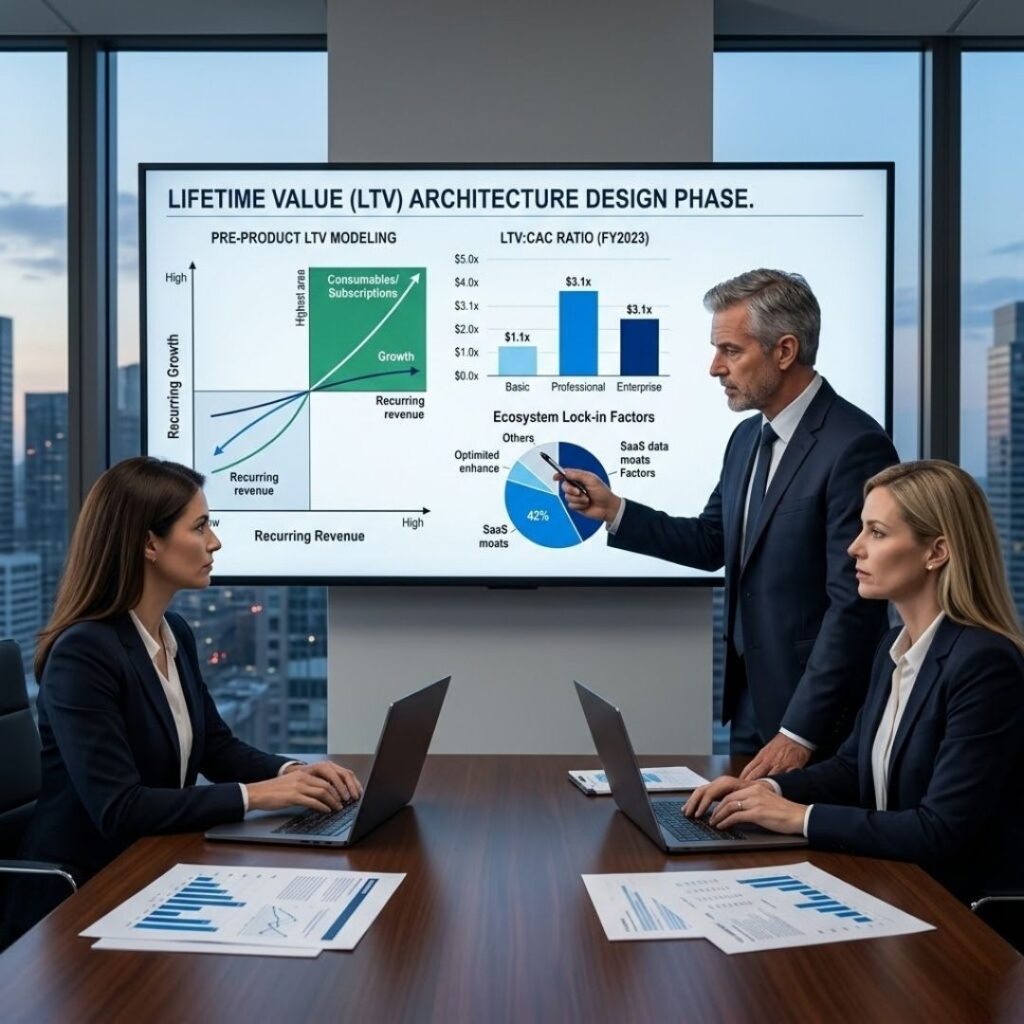
Lifetime Value is not a metric you calculate after customers start buying. It is an architectural decision made before the product is built. Organizations that treat LTV as a reporting figure rather than a design principle consistently underperform.
The Reward Principle: How to Sell the After-State, Not the Product

Most organizations sell features. But customers do not buy what a product does — they buy what their life looks like after receiving it. The shift from feature-based to after-state communication is one of the highest-leverage changes in a revenue system.
How McDonald’s and Five Guys Engineer Perception Without Changing the Product

McDonald’s and Five Guys deliberately overfill their fries so they spill into the bag. The decision is intentional. The psychology is precise. A well-engineered Reward moment costs almost nothing and produces outsized loyalty.
The Creative Edge: How to Make Your Offer Structurally Incomparable

The Creative Edge is the structural layer in an offer that fulfills the customer’s primary motivation in a way that makes direct comparison to competitors genuinely difficult. When comparison is easy, the offer is not ready.
Why Cutting Customer Service Costs More Than It Saves

Customer service is treated as a cost to minimize. But the calculation that justifies cutting it ignores what those interactions are worth. The false economy of service reduction costs significantly more in re-acquisition than it saves in operational efficiency.